Why Plastic Free

Why Is ECOlunchware Plastic-Free?
What’s for lunch? You hope it’s not toxic lead, plastic and vinyl. And whatever delicious, nutritious food you’ve packed should fill up your tummy – not the garbage can, too.
If you don’t have non-toxic and no-waste lunchware in your pantry, it’s time to tool up. With ECOlunchbox, it can be easy for you and your family to ditch the plastic tubs, plastic baggies, pre-packaged cheese sticks, yogurt squeezies, wrapped cookies and food bars.
Why pack homemade lunches made from high-quality, organic ingredients in leachy plastic containers with a vinyl plastic tote? These standard vinyl, insulated lunchboxes that are widely and cheaply available through big-box retailers fall short when it comes to health and reusability.
The food we put in plastic containers and vinyl lunchboxes can become contaminated when it comes into contact with the containers. Additionally, as we handle the plastic containers and the synthetic lunchbox, we are inadvertently touching plastics and our food and introducing plastics into our mouths.
Additionally, keeping these synthetic lunchboxes clean and mildew-free can be very difficult since linings crack and they are not built to withstand machine washing.
Why are ECOlunchboxes so special?
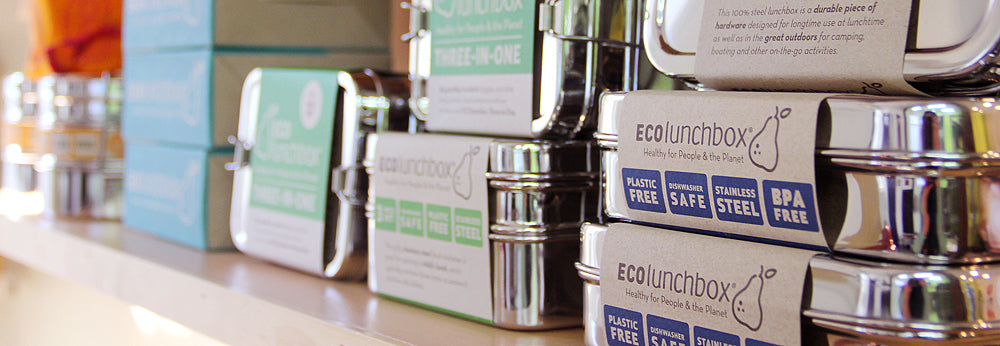
So, why are ECOlunchboxes plastic-free? Our focus is offering plastic-free, non-toxic products safe for people and the planet. We know that cobbling together a plastic-free, waste-free lunchbox solution that avoids the health risks of vinyl, plastic, lead and aluminum is a daunting challenge in today’s marketplace.
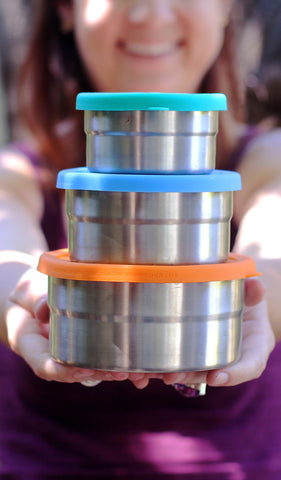
That’s why we’ve decided at ECOlunchbox to offer a lunchware line specializing in non-toxic, plastic-free solutions, such as our stainless steel bentos, sandwich boxes, snack containers and machine washable cotton lunchbags.
1-2-3... go plastic-free at lunchtime with ECOlunchbox!
1. Pick a stainless steel container – or two! Think about what you like to pack and how much and reference the dimensions of our container to pick the right sizes for your lunches.
2. Select your favorite machine washable lunchbag or artisan lunch wrap. Think about whether you like to carry your lunch with a purse-style lunchbag with short handles or over your shoulder with longer handles or tucked inside a wrap, like our Furoshiki ECOlunchwrap, that ties closed and opens to function as a placemat that you can lay your lunch out on in eco-style (and off dirty communal tables or yucky concrete benches).
3. Next, pick out a two-pack of reusable cotton napkins, which are sold in assorted block-printed colors and patterns.
4. And lastly, select one of our sporks – either bamboo or stainless steel.
ECOlunchbox can help you think beyond plastic at lunchtime – and crack the door to making healthier lifestyle changes at other times of the day, as well. If you can go green at lunchtime – who knows what else you can accomplish!
See for yourself:
Longer Version (3 minutes, 20 seconds)